
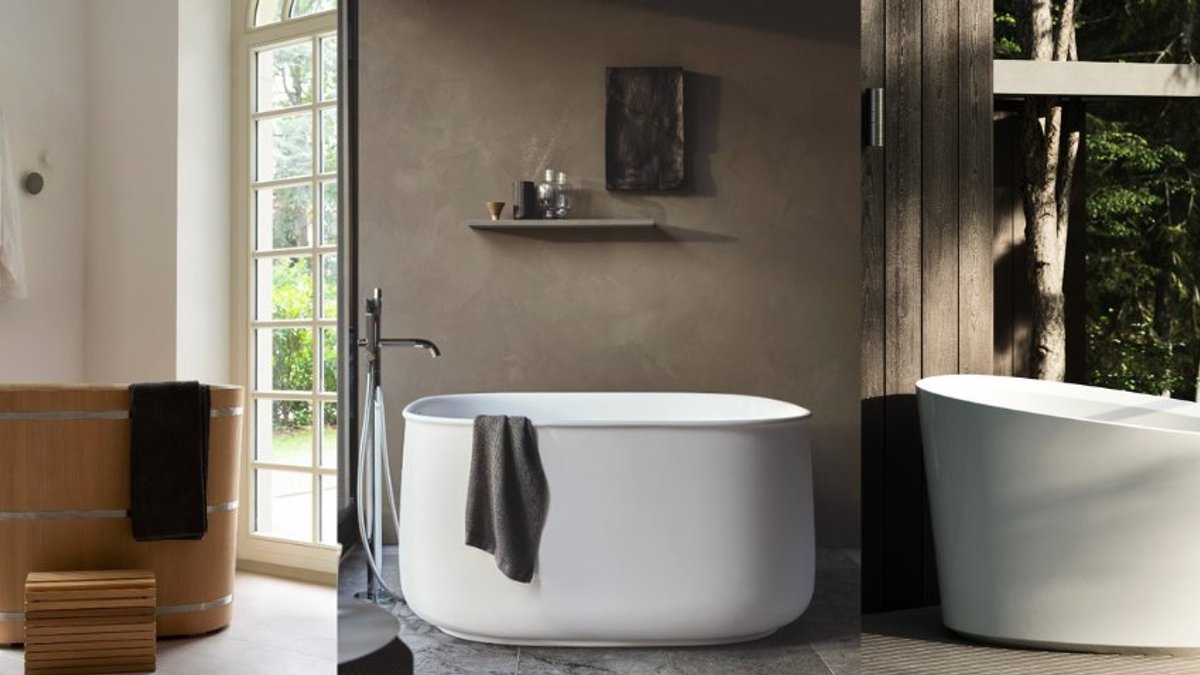
Japanese-style soaking baths are appearing in more UK homes as owners seek a calm, spa‑like retreat within a compact space.
Design rooted in tradition and modern living
The Zencha bathtub, created by Sebastian Herkner for Duravit, mimics the deep, rounded pools used in Japanese bathing rituals. Made from premium DuraSolid, the piece costs £6,954 and measures enough for full‑body immersion while remaining relatively compact.
Another model, the Kerid soaking bath from Victoria + Albert, starts at £4,284 and is 135 cm long. Its dual‑temperature capability lets users enjoy hot soaks and cold plunges in the same unit, fitting comfortably in modest bathrooms or outdoor decks.
The look fits many modern homes.
Both fixtures share an organically shaped silhouette that complements the growing Japandi aesthetic, a blend of Scandinavian minimalism and Japanese simplicity. The design focus is on a low‑profile, deep basin that encourages a relaxed, upright posture similar to that found in traditional onsen.
Wellness claims and market momentum
Proponents say the deep immersion helps improve posture, boost circulation, ease anxiety, and support better sleep. Muscle tension may also lessen with regular use.
Joint discomfort may ease with regular use.
Mark Tones, founder of Aquaroc, notes that “Japanese‑style baths are rising in popularity because, as daily life gets busier, homeowners are looking to bring calm into their homes.”
Related: Garden Pest Control Using Integrated Pest Management
Designers note the visual impact.
Mike Whitfield, a luxury interiors specialist at Lusso, adds that the tubs “can be placed elegantly in the corner of the room, or in the centre to act as a bold statement piece that grounds the overall aesthetic, allowing you to maximise the space without compromising on quality.”
These installations also claim sustainability advantages. Their reduced footprint means they use less water than standard freestanding bathtubs, an appealing factor for urban apartments where every square metre matters. Emma Joyce, head of product marketing at House of Rohl, observes that “the bathroom is increasingly viewed as a retreat for both physical and mental restoration,” and that cold‑water bathing is gaining traction as part of wellness routines.
From a practical standpoint, the deeper design raises the tub’s sidewalls, which can affect entry and exit. Adam Wollerton, bathroom design manager at Bathroom & Kitchen Eleven, cautions that “they are also shorter by nature, so if you like to elongate and stretch out, then this may not be for you.” He suggests the units suit users who enjoy being fully submerged or who use the space for reading or streaming while bathing.
The appeal of these fixtures goes beyond health claims. They blend natural materials—such as stone or aromatic cedar—into both minimalist and more elaborate décor schemes. For example, Indigenous’s Ofuro bath, handcrafted from cedar, starts at £7,880 for a 98 × 66 × 77 cm model, offering a fragrant, tactile experience that echoes traditional Japanese homes.
In the broader context, the rise of these tubs reflects a cultural shift toward home‑based wellness. As remote work normalises, people are investing more in spaces that support mental reset and physical recovery without leaving the house. This mirrors historical patterns where societies adopt health‑focused design during periods of increased stress.
Pricing across the segment varies widely. The Roca Ohtake Japanese soaking tub in gloss white retails for £3,000, while its matching countertop basin is £478. A matte‑white stone version from Aquaroc is listed at £1,997, and Agape’s Immersion round tub, designed by Neri & Hu, is offered on request.
Industry voices see the trend as part of a larger evolution. Natalie Bird, brand marketing manager at Roca, describes the offerings as “sculptural yet compact, sustainable yet indulgent, a true reflection of how luxury bathroom design is evolving toward more meaningful, mindful experiences.”


