
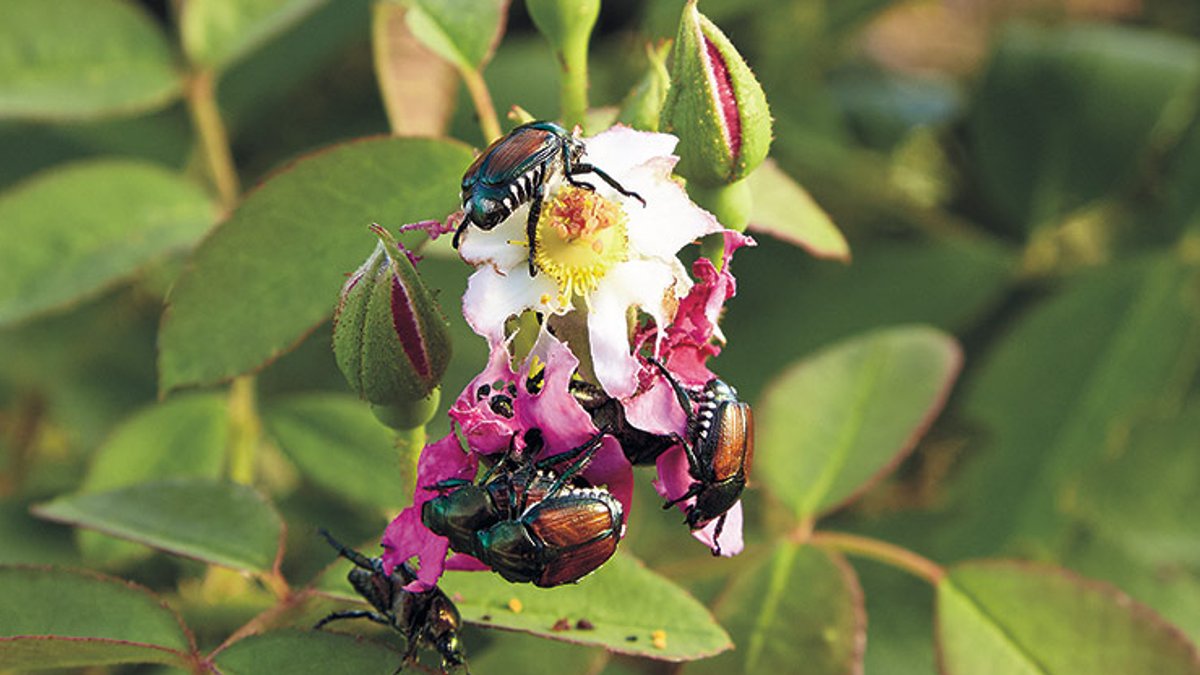
Controlling insects in the garden often requires a strategy known as Integrated Pest Management. This approach focuses on long-term prevention of damage through a combination of techniques rather than relying solely on chemicals. A few insects rarely cause a significant problem, but large populations can be devastating. Two tiny bugs can go forth and multiply into a population of biblical proportions in no time at all.
Assessing the Damage
Not every bug warrants a reaction. Is the whole plant defoliated, or are there just a few tattered leaves? Do you have to throw the whole pear away, or can you cut out the bad spots? Some insects can be ignored entirely. However, when roses are stripped bare by Japanese beetles, it is time to intervene.
Since insect populations can multiply quickly, it is vital to look at the garden every day or two, or at least whenever possible, to ensure nothing is getting out of hand. Look for insects or chewed-up leaves to gauge the severity of the issue. Traps offer another way to see if populations are increasing.
Monitoring and Tracking
Fruit tree growers often use traps that lure moths into a box where they can be counted. Sticky traps, particularly yellow ones, are another good way to count and also get rid of small flying insects. Gardeners often feel an urge to intervene immediately at the first sign of chewing, but this reaction can be counterproductive. Allowing natural predators time to establish themselves often resolves minor infestations without any human interference. This measured approach reduces labor and preserves the ecological balance within the soil and foliage.
Related: Vibrant Perennials Brighten Up Front Yards
Prevention and Physical Barriers
Starting with healthy, robust plants gives them a better ability to fight off an insect invasion. Cleaning up and disposing of dead foliage in the fall or early spring removes overwintering adults and eggs. This prevents a new generation from emerging when the weather warms. Deterrents provide a way to prevent insects from reaching their target.
Row covers create a physical barrier between plants and pests. Kaolin clay, a mineral applied as a spray, leaves a white film over plants to repel pests. It is often used on fruit trees to deter codling moth. Insects find the coated fruit unappetizing, but the clay is nontoxic. Produce treated with kaolin clay just needs to be washed thoroughly before eating.
Physical destruction of pests is another low-impact method. Handpicking egg masses, caterpillars, or adults is effective, as is blasting critters off with a stream of water. Pruning out infested branches can also stop the spread of damage to healthy parts of the plant.
Biological Controls
Predatory beneficial insects feed on many common pests, such as aphids, spider mites, and cabbage loopers. These beneficials need a high enough pest population to be attracted to a plant to feed there. It is necessary to monitor for natural predators and give nature time to act. Animals also play a role in biological control.
Related: Girl discovers Revolutionary War cannon in neighbor’s barn
Frogs, snakes, and birds are effective hunters in the garden. Even backyard chickens can assist by eating insects found in the soil or on low-hanging plants. Encouraging these allies can significantly reduce the need for other interventions.
Using Chemicals as a Last Resort
Sometimes a chemical treatment is the best or quickest option before a crop is ruined. Insecticidal soap and horticultural oils work by coating an insect’s body, effectively suffocating them. These options target the pest without leaving long-lasting residues. Organic insecticides, such as pyrethrins derived from chrysanthemums and neem oil from seeds of the neem tree, kill insects after they ingest the chemical while feeding.
While relatively safe for humans, even organic pesticides have drawbacks. They can kill nontarget beneficial insects, like honeybees and lady beetles. Many synthetic insecticides are available at garden centers. Some are specific to certain kinds of insects, while others will kill any bug they come into contact with. Gardeners must use these chemicals safely by strictly following the label instructions. It is essential to confirm that the specific pest is listed for that chemical.


