
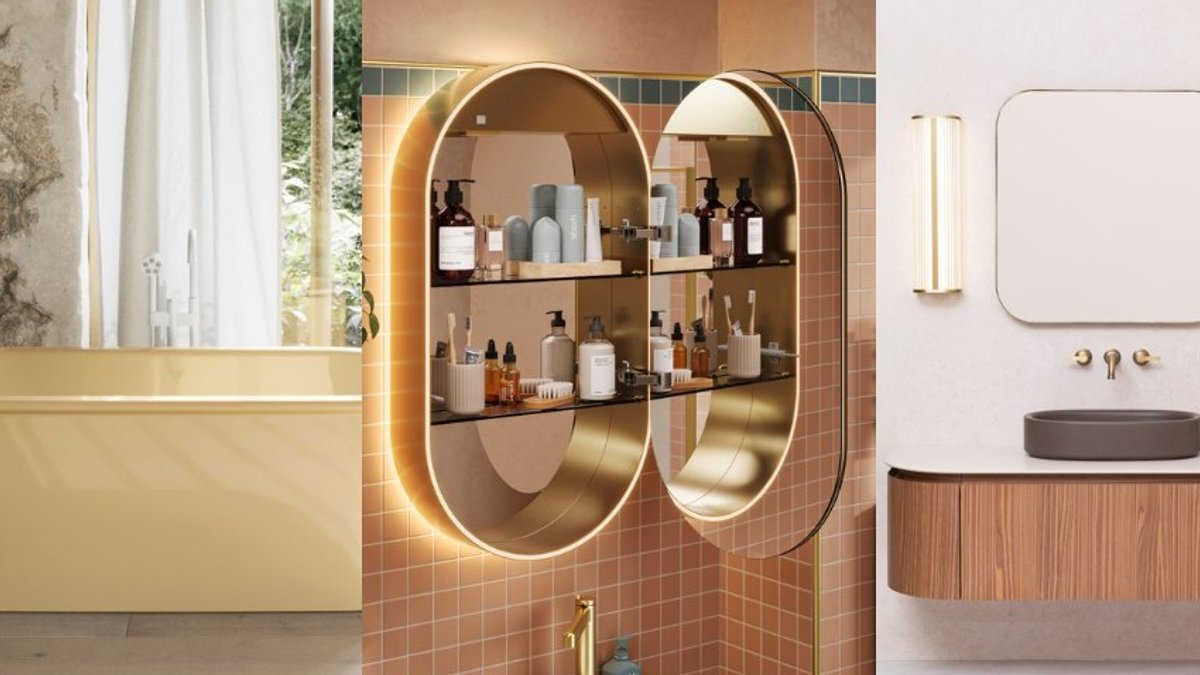
The pill shape has become a key element in modern bathroom design, combining soft curves with clean lines to create spaces that feel both elegant and relaxing.
The rise of a softer silhouette
At a recent trade show in Birmingham, pill-shaped mirrors, basins, and bathtubs filled the displays. Their smooth, elongated curves stood out against the sharp angles of traditional bathroom fixtures. Designers and brands now prefer this shape for its ability to blend structure with warmth.
Barry McGrath, lead product designer at Sonas Bathrooms, calls the pill shape a middle ground between a rectangle and a circle. “It combines the practicality of straight lines with the comfort of curves,” he says. “That balance makes products feel refined without being cold, and soft without losing precision.”
Louise Ashdown, head of design at West One Bathrooms, explains that the shape fits a broader movement toward bathrooms as restorative spaces. “These silhouettes feel deliberate and calming,” she says. “They add a sculptural quality without being overly decorative.”
Richard Eaton, design manager at Tissino, reports a 16% increase in demand for pill-shaped mirrors from 2024 to 2025. “It’s not just a passing fad,” he says. “Homeowners are investing in it.”
Why the shape works in any space
The pill shape’s versatility makes it appealing. Unlike ornate designs, it can soften a room’s edges without overpowering it. “A curved mirror or cabinet can take the edge off a scheme while keeping a clean finish,” Eaton says. “It works in any size room.”
Designers agree that balance is essential. Pill-shaped pieces should complement, not dominate, a space. Pairing them with simple furniture, textured surfaces, and strategic lighting creates a modern yet practical look. Eaton notes that the shape brings a sense of ease, feeling both contemporary and timeless.
Related: Tips for Building Better Garden Beds
McGrath ties the trend to a cultural shift in how people view bathrooms. “They’re no longer just functional spaces,” he says. “They’re connected to wellbeing, routine, and retreat. The pill shape supports that by softening hard materials and reducing visual harshness.”
The design extends beyond fixtures. Tiles, vanities, and freestanding bathtubs now feature the shape. A 178cm marble bath from Lusso, priced at £117,000, shows how luxury brands are adopting the form. More affordable options, like a £415 LED demister mirror from Armera or a £699 vanity from Bathroom Mountain, demonstrate its accessibility.
Tiles provide an easy introduction to the trend. The Arno oval blush pink mosaic tile is priced at £9.99. Claybrook Studio’s Tavolozza Moss Curve tile, at £72 per square meter, offers another way to incorporate the shape.
The trend reflects a broader shift in interior design toward spaces that prioritize comfort alongside function. As homes increasingly serve as sanctuaries, the pill shape offers a subtle way to make a bathroom feel like a retreat.
Brands are taking notice. Acquabella’s Yura freestanding bath, priced at £2,588, features the shape, as does Bette’s BetteSuno Oval bath starting at £7,032. High-end manufacturers like Axor and Kallums Bathrooms have also added the silhouette to their collections.
For now, the pill shape remains popular. Its adaptability across styles—from minimalist to bold—ensures it will stay relevant in bathroom design for years.
Adding architectural curves to a bathroom can enhance the effect even further.


