
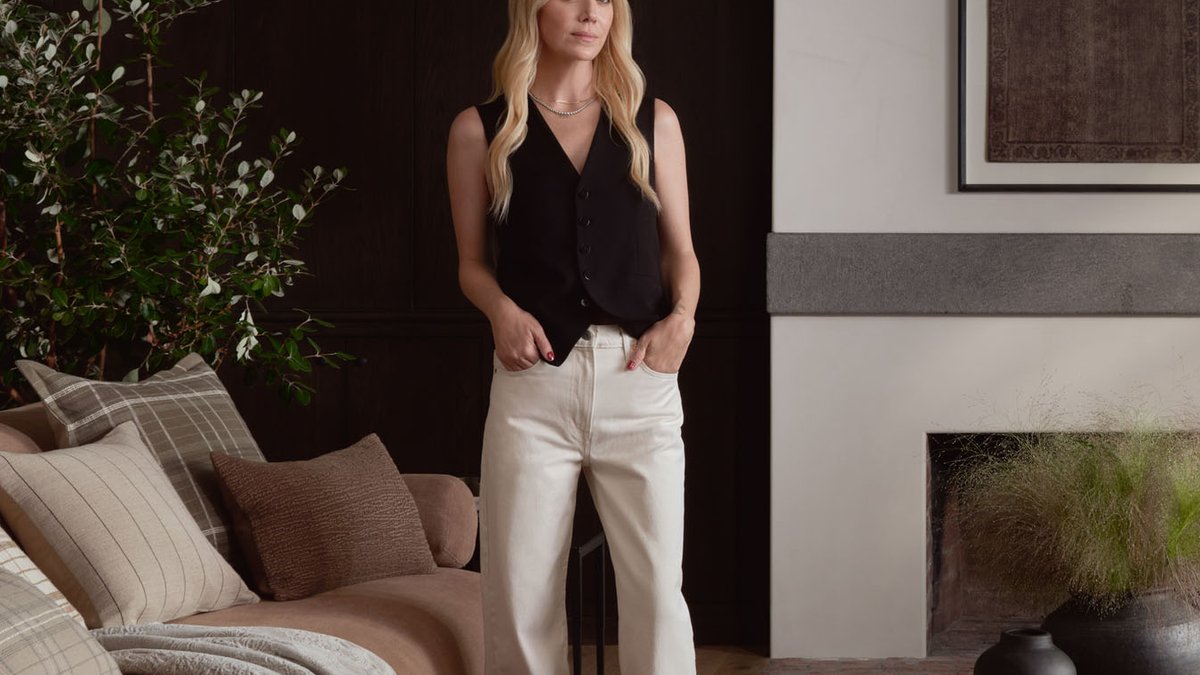
Amber Lewis believes great design is not about the finished room, but the process that creates it. In her new book, Interiors: Curated Spaces from Start to Finish, launching September 29, the designer reveals the methods behind her work through a framework she calls the “Six P’s”: Ponder, Play, Procure, Patience + Panic, Pull It Together, and Pride. The book covers nine projects, stripping away the glossy after images to show the messy, mental work that happens before a single swatch is pulled.
The Myth of the “Perfect” Look
Amber Lewis did not set out to be an interior designer. She started working retail and focused on displays rather than sales, discovering a knack for styling tables and making beds. Clients eventually asked her to handle their homes, and a business was built without formal training. She taught herself Photoshop at night and learned to paint walls, allowing the firm to grow organically while she focused on creative execution.
A common misconception about the firm’s success is that it came from one defining aesthetic breakthrough. The designer notes that success was not a single style moment, but fifteen years of evolving taste and real-world problem solving. People often overlook the invisible mental work that happens months before a project begins. In this industry, the ability to visualize the finished room in one’s head before construction starts is often more important than technical training.
Amber Interiors has become a brand that functions as a verb. The designer aims for spaces where people feel they can exhale, avoiding a polished or precious feel. She prefers neutral backgrounds layered with unexpected vintage pieces or textured surfaces. The goal is a room that feels calm and lived-in, even if the house is brand new.
Related Post: Six Autumn‑Winter 2026 Interior Design Trends
The book organizes nine full home projects around the emotional and practical arc of the “Six P’s.” It includes source callouts for specific paint colors and fabrics, intended to be useful rather than just decorative. During the writing process, the designer realized how much of the job relies on instinct. Articulating these invisible steps was the real surprise of the project.
One object with age or history is essential for every room. A vintage piece or worn texture prevents a space from feeling flat. Home design matters because it absorbs the stresses of daily life. A home should provide comfort and inspiration, especially now that the space must function for both work and rest. The designer has built her career on her own terms, staying in control of the creative and business sides without outside investors.
How to Build a Career Without a Degree
Amber Lewis found that success came from practical application rather than formal schooling.
Visualizing the Finished Room
Writing the book forced the designer to articulate things she did on instinct. She realized how much of the job is invisible. The process involves building the finished room in the head months before anyone else can see it. Getting to slow down and explain the reasoning behind decisions was a surprising part of the project. Articulating these invisible steps provided clarity about her work.


