
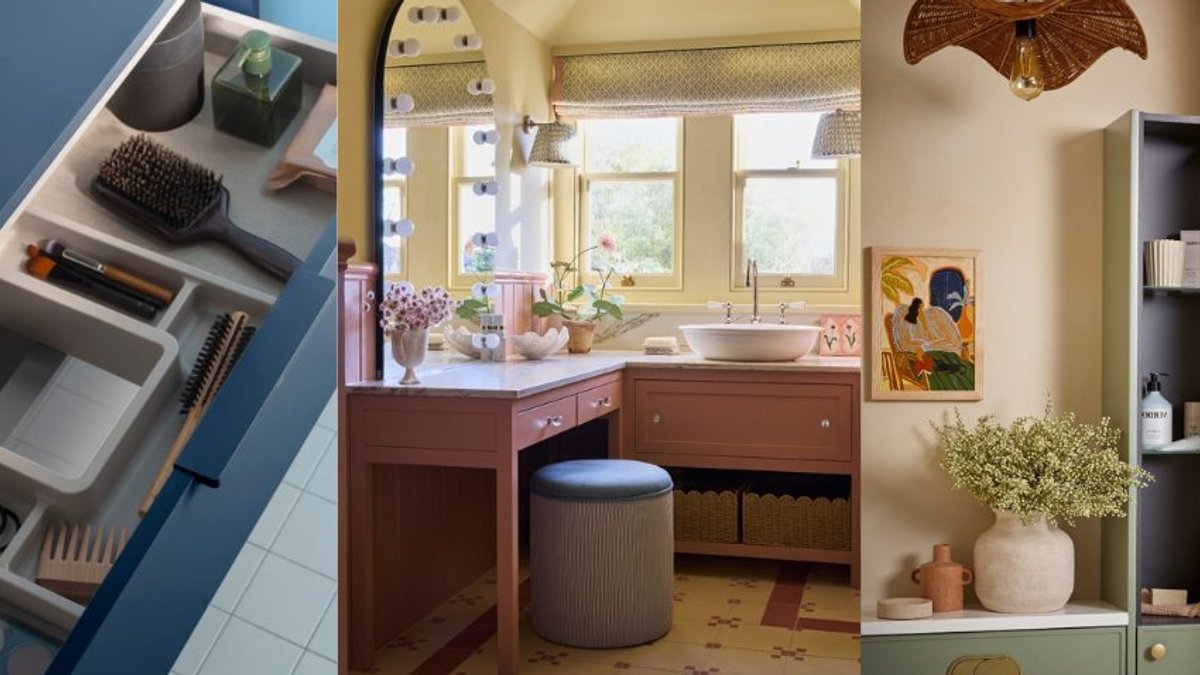
Most bathrooms are small, so storage has to work harder than it appears. The best setups blend seamlessly into the space—no overstuffed cabinets, no toilet paper rolls stacked on the tank, no bottles balanced precariously on the sink. Poor storage makes a tight room feel even more cramped.
Start with a list, not a wish list
Georgina Fraser, managing director at Jeffreys Interiors, advises listing everything used in the bathroom—daily, weekly, and occasionally. This approach helps clarify priorities. Justine Bullock, director at The Tap End, asks clients to rate their storage needs on a scale of one to five. Most choose three essentials: a vanity unit, a mirror cabinet, and a niche.
Sophie Pringle, founder of Pringle & Pringle, combines hidden storage for bulky items with open shelving for daily essentials. The layered approach keeps the space feeling calm. A functional bathroom often depends on this balance—hiding what isn’t needed while keeping essentials accessible.
Related: Ten clever ways to maximize bedroom storage
Designing for children might call for a high-mounted medicine cabinet. For guests, a simple vanity with drawers usually works. The focus should be on tailoring storage to the users, not just maximizing capacity.
Measure twice, install once
Louise Ashdown, head of design at West One Bathrooms, emphasizes that the size and shape of stored items matter more than quantity. Tall bottles need deep shelves or tall cabinets, while small cosmetics get lost in deep drawers. Matching storage to items ensures functionality rather than just filling space.
Plumbing and layout play a major role. Fiona Duke, an interior designer, worked around an alcove in a Victorian loft bathroom. The custom vanity she designed turned dead space into useful storage.
Small details like concealed laundry bins or hidden charging points for electric toothbrushes add practicality. These features prevent a bathroom from feeling like an afterthought.
Related: Vibrant Perennials Brighten Up Front Yards
Designers agree the vanity is the most important piece in the room. A mirrored cabinet ranks second, offering storage without visual bulk. Together, they handle most daily needs. The real challenge isn’t just adding storage—it’s placing the right kind in the right spot.
Wall-mounted vanities save floor space and can serve as a design focal point. Drawers work better than doors in tight spaces, allowing easy access without needing extra room to open. Sliding doors on mirrored cabinets also help by avoiding intrusion into walking areas.
Niches, recesses, and other hidden wins
Recessed storage is one of the smartest solutions for small bathrooms. A niche in the shower or above the bathtub keeps bottles accessible without taking up floor space. Louise Ashdown explains that stud walls can hide deep recesses behind mirrors or panels, making storage invisible when not needed.
Freestanding storage adds warmth. Sean Symington, an interior designer, used an antique piece in one project to soften a fitted look. Laura Stephens suggests fabric skirting around a pedestal basin with shelves underneath, combining style and function.
Related: Affordable lawn care programs boost growth
The most effective bathrooms use layered storage. Concealed cabinets hold bulkier items, open shelves display daily essentials, and niches organize shower products. The goal isn’t just organization—it’s creating a calm, uncluttered space. Often, this means using less storage than expected but choosing the right type.
For very small bathrooms, Charlotte Luxford recommends converting narrow floorstanding cupboards into vanities. These units, often under 60 cm wide, fit where standard vanities won’t. She has used this approach in two of her own projects.
The best storage solutions don’t draw attention. They simply work—efficiently and without disruption.


