
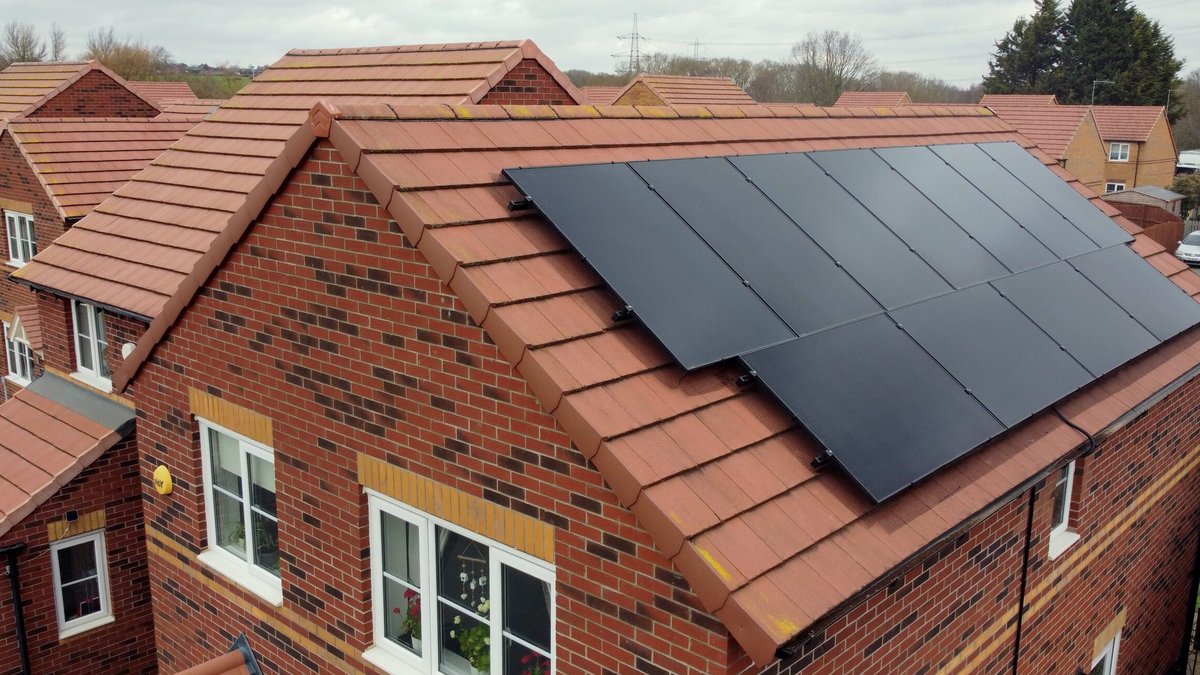
Solar panels are now a common sight across the UK, yet numerous homeowners persist in holding outdated beliefs about their property’s suitability for renewable energy. Concerns about roof orientation, pitch, and potential effects on property value continue to deter individuals from exploring solar power, even as technology and installation techniques have advanced significantly. With energy costs remaining a primary worry and environmental consciousness growing, modern solar systems have never been more relevant or accessible.
British Climate Is Actually Solar Friendly
Current solar installations are engineered to function efficiently in a broad spectrum of residential properties, enabling far more households to produce their own power than was previously imagined. Despite common assumptions, the British climate actually lends itself well to solar generation. Even though the nation receives less sunshine than much of southern Europe, its position roughly between 50° N and 60° N latitude offers ample daylight for much of the year.
In summer, the day length extends, allowing panels to produce a large share of electricity, while the lower sun angles of winter still yield useful output. On average, about 71 % of a system’s yearly generation comes from the spring-summer period, leaving roughly 29 % for autumn and winter. Today’s photovoltaic technology is far more efficient than older models, so panels keep generating power even on cloudy days. Rather than depending solely on direct sun, they convert ambient daylight into electricity throughout the year.
Myth 1: My roof faces the wrong direction
A frequent myth claims that only roofs facing south can host solar arrays. While south-oriented roofs usually deliver the highest yearly output, they are not the sole viable choice. Roofs turned east or west can also achieve strong performance, especially for homes whose electricity demand peaks in the morning or evening. An east-facing system tends to create more power early in the day, whereas a west-facing setup continues to supply electricity later into the afternoon and night.
For many households, this generation timing dovetails nicely with daily energy use. During a professional survey, installers evaluate the building’s orientation together with projected consumption to decide the optimal panel arrangement. Instead of a one-size-fits-all method, each layout is customised to optimise the homeowner’s return. Installers also look for potential shading obstacles such as chimneys, skylights, dormer windows or nearby trees, which could limit the usable roof area at certain times, and factor these into the design.
North Facing Roofs Still Viable
Properties whose roofs mainly face north typically produce less electricity than those with more favourable aspects, but this does not automatically disqualify them from solar. In some scenarios, installers may suggest alternative solutions like ground-mounted arrays or a hybrid of roof and garden panels, allowing owners to exploit the space they have most effectively.
Myth 2: My roof is the wrong angle
Another common misunderstanding concerns roof slope. The ideal tilt for solar panels in Britain generally lies between 30° and 45°, a range that matches a large portion of the housing stock. Nevertheless, roofs outside this band can still support productive systems. Shallower pitches ranging from 10° to 30° often perform adequately, and specialised mounting brackets can be employed to achieve a more advantageous angle when needed. A minimum inclination of around 10° also permits rain to rinse away dust, leaves and other debris, helping maintain panel efficiency year-round.
Completely flat roofs introduce extra challenges because standing water and accumulated grime can lower efficiency over time. Still, dedicated mounting solutions exist that create the necessary slope while preserving structural integrity. Since fully level roofs represent only a small fraction of UK homes, this issue impacts a minority of installations. Professional structural evaluations are carried out to confirm that both the roof’s condition and the chosen mounting approach are suitable before work begins.
Solar Panels Can Boost Property Value
Some owners worry that adding solar panels might hinder a sale or depress the property’s price. Research, however, points to the opposite effect. A study by Swansea University revealed that homes equipped with solar can achieve sale prices roughly 6.1 % to 7.1 % higher than comparable houses without panels. For a median-priced residence, this translates to an uplift of about £14,000 to £16,000.
One driver of this premium is the growing weight of Energy Performance Certificate (EPC) ratings. Every property sold or let now requires an EPC, grading energy efficiency from A through G. Solar installations can markedly boost this rating, making the dwelling more appealing to buyers who are increasingly mindful of running costs and long-term efficiency. Reduced utility bills, greener credentials and the ability to generate renewable power all enhance a property’s attractiveness in today’s energy-aware market.
Related Post: How it Works, Benefits & Installation of Solar Panels
Today’s solar modules have also become much more aesthetically refined. Modern kits feature slim, low-profile designs that blend with a variety of roof styles, limiting visual impact while delivering high performance. The financial upside of solar goes beyond mere electricity generation; each system is sized to the household’s specific consumption patterns, enabling owners to utilise a larger share of the power they create instead of purchasing from the grid.
Maximising Savings With Battery Storage
Battery storage systems have become an increasingly popular addition to solar installations, allowing excess electricity generated during the day to be stored for use later in the evening or overnight. This increases self-consumption and further reduces reliance on grid electricity. Homeowners can also take advantage of export tariffs, allowing unused electricity to be sold back to the National Grid.
Combined with smart energy tariffs, battery storage and thoughtful energy usage, this can significantly improve the overall return on investment. Simple changes in household routines can also maximise savings. Running washing machines, dishwashers or other energy-intensive appliances during daylight hours allows them to use electricity generated directly from the solar panels. Alternatively, excess daytime generation can be stored in a battery for later use when electricity prices may be higher.
Every household has different energy requirements, and experienced installers can recommend the most suitable combination of solar panels, battery storage and tariff options to achieve the greatest financial benefit. Professional advice makes the difference. No two homes are identical, which is why professional assessments remain an essential part of any solar installation. Installers evaluate roof orientation, pitch, shading, structural integrity and available roof space before calculating expected annual generation and estimating how long the investment will take to pay for itself. Many providers also offer finance options to spread the initial installation cost. At the same time, government grants and local support schemes may be available in certain areas, making solar more accessible to a wider range of homeowners.
Modern monitoring technology further enhances the experience, with smartphone apps allowing homeowners to track electricity generation, household consumption, battery performance and financial savings in real time. This provides valuable insight into how energy is being produced and used throughout the day. Although savings vary depending on property size, system specification and household consumption, annual reductions in electricity bills of around £700 are considered achievable for many homes.
As energy prices continue to fluctuate and demand for sustainable living grows, solar power represents an increasingly practical home improvement. Far removed from the misconceptions that still surround the technology, modern solar systems are suitable for a far wider range of properties than many homeowners realise. Whether the roof faces east, west or south, or whether the pitch is slightly shallower than ideal, there are often effective solutions available.
With the potential to lower household energy bills, improve EPC ratings, increase property value and reduce carbon emissions, solar panels have become one of the most valuable long-term investments many homeowners can make. For anyone considering renewable energy, the first step is a professional assessment. A tailored survey can identify the most effective system design, estimate future savings and demonstrate how today’s solar technology can help households generate cleaner, more affordable energy for years to come.
Next Energy is a UK renewable energy specialist, helping homeowners reduce energy costs and increase energy independence through the installation of solar PV systems and battery storage solutions. With expertise in designing and delivering tailored renewable energy systems, Next Energy supports customers from initial consultation through to installation, helping them get the most from their home energy generation and storage. Next Energy is part of DCC Energy, a division of DCC plc, a leading international sales, marketing and support services group.
Managing flat roofs and daily energy use
Flat roofs require specialist mounting systems to create the necessary angle for performance. Standing water or dirt on a completely level surface can reduce efficiency over time. Special brackets provide stability while introducing the required tilt. This approach works for a small percentage of properties.


