
At this year’s Clerkenwell Design Week in London, a toilet stopped visitors in their tracks. Not for its function, but its form. The wall-hung model from Trone, displayed at West One Bathrooms, curved like a speedboat in deep royal blue, its sleek contours defying the traditional boxy silhouette of standard sanitaryware. Nearby, a cylinder-shaped toilet without a lid paired a flush and cistern that resembled a novelty fish tank light, its translucent housing and internal glow transforming a mundane mechanism into an unexpected visual feature. Critics might call it art, but the distinction blurs when an object’s primary purpose—waste disposal—is overshadowed by its aesthetic ambition.
When fixtures become focal points
The show floor brimmed with reimagined basics, each piece pushing the boundaries of what household items are expected to be. Lights evoked museum installations, their forms stretching beyond mere illumination into sculptural territory. Some fixtures dangled like suspended mobiles, their delicate frames casting detailed shadows, while others mimicked organic growths, with branching arms that defied industrial symmetry. Tiles channeled geometric abstraction, their patterns arranged in asymmetrical grids or overlapping shapes that created optical illusions under shifting light. Basins doubled as contemporary sculptures, their basins carved from single blocks of stone or molded into undulating waves that made them appear more like gallery pieces than functional vessels. Even marble mosaics, priced at £154 to £218 per square meter, blurred the line between utility and gallery piece, their detailed inlays and hand-cut tesserae demanding closer inspection.
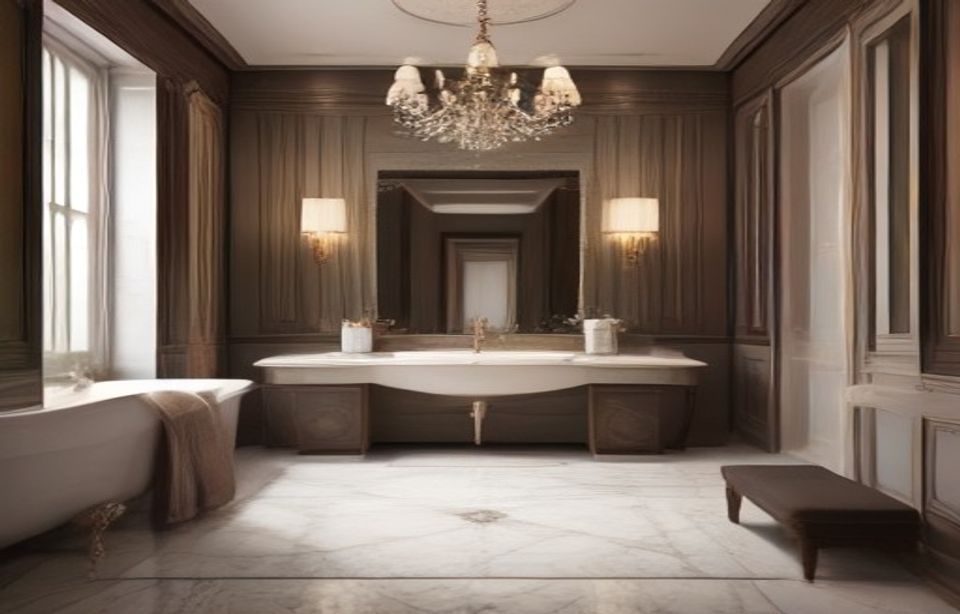
This shift isn’t just about aesthetics. Homeowners increasingly want spaces that reflect individuality, not just resale value, and the bathroom—a room often overlooked in design—has become a new frontier for self-expression. A bold toilet or an abstract sink becomes a conversation starter, less about practicality and more about personality. The trend reflects a broader cultural movement toward personalization, where mass-produced uniformity is rejected in favor of objects that tell a story. A statement toilet, a sculptural faucet, or a light fixture that looks stolen from a gallery can anchor a home’s design, serving as a centerpiece that defines the space’s character.
The implications extend beyond decor. If a toilet can be art, what else in a house might follow? The trend suggests a shift from uniform interiors to curated collections, where even the most mundane objects carry meaning. The bathroom, once a purely functional space, is now a canvas for experimentation, where every fixture is an opportunity to challenge expectations. This approach treats the home as a living gallery, where utility and beauty coexist in deliberate tension.
Related: Picking the right kitchen sink made simple
The fine line between art and absurdity
Not everyone is convinced. Some argue that turning a bathroom into an exhibition risks sacrificing function for form, a critique that dates back to the earliest days of design movements. A toilet that looks like a speedboat might impress guests, but will it flush reliably after years of use? A sink shaped like a modernist sculpture might leak if its unconventional angles compromise the integrity of its seals. The concern is that novelty could come at the expense of durability, a trade-off that some homeowners may not realize until it’s too late. Others question the practicality of investing in pieces that may fall out of fashion, leaving buyers with expensive fixtures that feel dated within a decade.
Then again, art has always been subjective. What one person sees as a gimmick, another might see as a masterpiece, and the bathroom is no exception. If a homeowner spends £1,100 on a toilet that doubles as decor, who’s to say it’s not worth it? The value of such pieces lies not just in their utility but in their ability to provoke thought, spark conversation, or simply bring joy. The market seems to be testing the limits of this philosophy, with prices at Clerkenwell ranging from £145 per square meter for patterned tiles to over £1,000 for a single toilet. The implication is clear: Some buyers are treating these pieces less like fixtures and more like investments. The question is whether these objects will hold their value over time or if they’ll be seen as relics of a fleeting trend.
The debate also touches on the role of craftsmanship in design. Many of the pieces on display at Clerkenwell were produced in small batches, with attention to detail that mass-produced items lack. The marble mosaics, for example, were cut and assembled by hand, their irregularities a sign of the skill of the artisans who made them. This level of craftsmanship justifies higher prices but also raises the stakes—if a piece is treated as art, it must be made to last, both structurally and stylistically. Whether this trend sticks remains to be seen, but for now, the bathroom is no longer just a utilitarian space. It’s a canvas—and some homeowners are painting with porcelain, stone, and light, transforming the ordinary into something extraordinary.


