
Shade gardening often presents unique challenges, but Joyce Hannaford has spent 23 years turning a difficult corner lot into a private retreat. When she and her husband, Charlie, first moved into their Massachusetts home, the property felt exposed. Joyce described the experience of living on the corner lot as being in a fishbowl.
To address the lack of privacy, they installed a fence and planted numerous trees around the perimeter. The vegetation took time to mature, but the result is a sheltered space just outside their back door. It is now a suitable spot for eating dinner with friends or simply relaxing alone.
Designing the Layout
The garden features two distinct brick patios connected by stone steps. The organic shape and color of the stone repeats the color and texture of the nearby raised beds, adding variety to the bricks. Joyce refers to the smaller area, furnished with blue chairs, as the cocktail patio.
The larger space serves as the dining patio. Both areas are encircled by lush, shade-tolerant plantings that create a sense of enclosure. This design effectively blocks views from the street and neighboring properties.
Managing Tree Growth
After 18 years, the garden’s maturity created new problems. A multistemmed river birch next to the patio had become intrusive. Its roots pushed up the stone edging and the patio bricks, disrupting the hardscape.
Related: Shelly Schnettler wins garden award runner up
Additionally, the tree canopy had filled in significantly. This shifted the light conditions in the area from dappled shade to dense shade. Joyce tried to adjust the border and work carefully around the main roots. Eventually, growing anything became too difficult. She made the reluctant decision to have the tree removed.
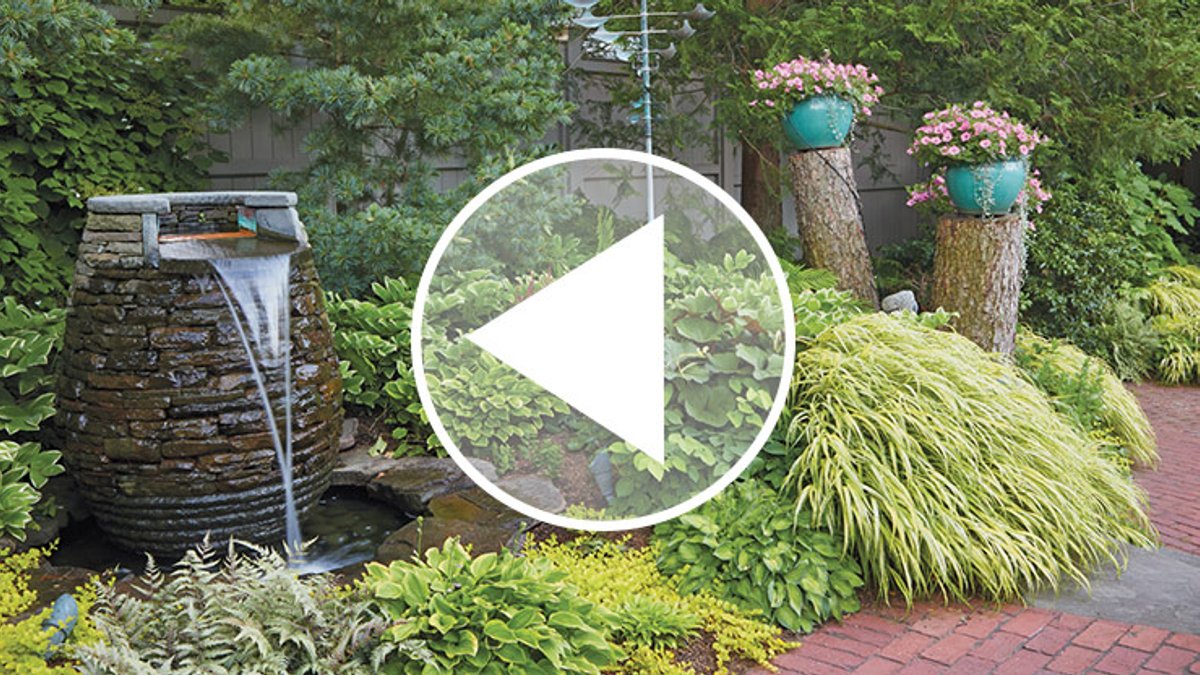
The removal altered the environment drastically. In the first year following the tree’s removal, plants like hakonechloa, ferns, and hostas developed crispy leaf edges. They looked a little faded due to the sudden increase in sunlight exposure.
Adapting to New Conditions
By the next season, the plants had recovered. The increased light actually made it easier to grow certain varieties. Joyce found she could now successfully cultivate impatiens and other flowering plants that perform best with a bit of morning sun or dappled shade.
This situation mirrors a common issue in long-term gardening where the initial canopy matures and alters the microclimate, forcing the gardener to reset the planting strategy rather than simply maintaining the status quo. Joyce’s willingness to remove a mature tree shows how flexibility is often more valuable than persistence when the physical environment shifts.
The space now has a cozy, intimate feel. A fence runs along the property line, while remaining trees screen the view of other nearby neighbors. Layers of shrubs and perennials help muffle sounds from the surrounding area.
Related: Couple finds dream home after years of searching
Benefits of Shade
Joyce has discovered a significant advantage to gardening in the shade. It is much easier to move plants. The sun is less harsh, and the temperatures in the shade remain cooler.
If a plant is not doing well in a specific area, she relocates it in the morning. After watering it slightly more than the other plants, it settles in quickly. This flexibility allows for constant adjustment of the garden’s layout without stressing the vegetation.
A stone recirculating fountain sits next to the dining patio. It is surrounded by a collection of texture-rich shade perennials. Adding a water feature to this part of the garden provides both a focal point for the dining area and a source of soothing sound. The flowing water makes sitting in the shade even more relaxing and helps mask noise from nearby neighbors.
Winter preparations are necessary in this USDA Zone 6 garden. Joyce drains the basin and places a stone cap on top of the fountain to prevent snow and debris from collecting inside. Most winters, she tops the structure off with a container full of greenery and colorful stems. This creates an enjoyable view from inside her warm home during the colder months.


