
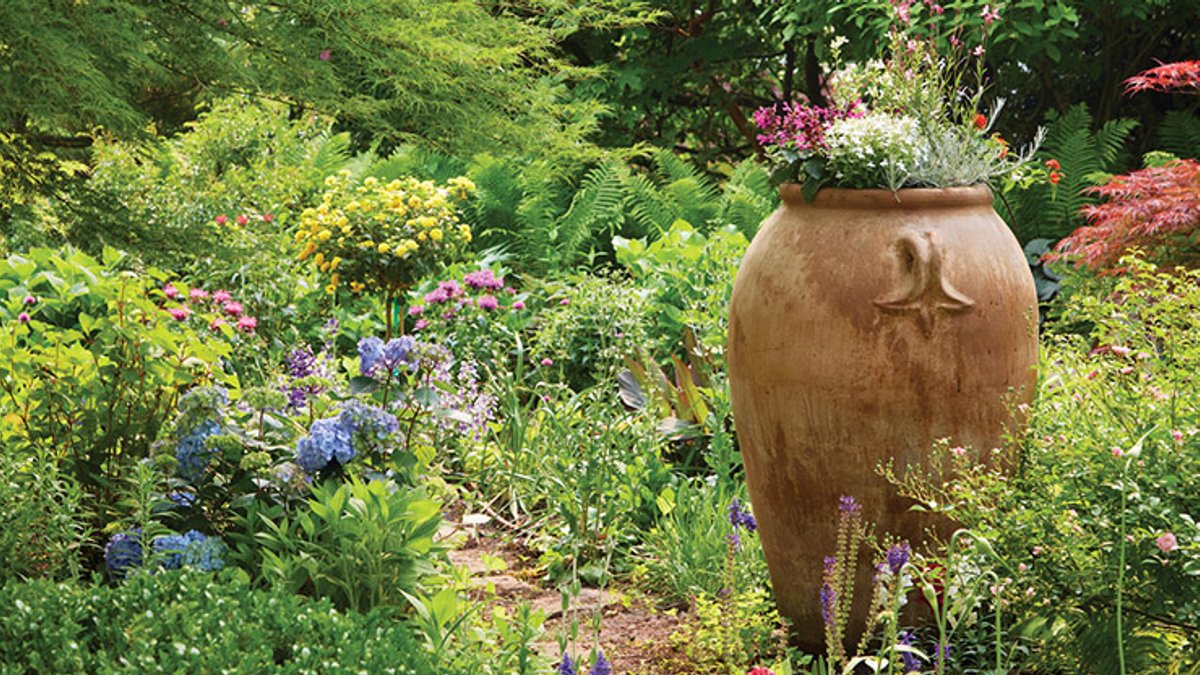
When Ellen Goldfarb settled into her New Jersey home four decades ago, the front yard was a plain lawn edged with a handful of generic shrubs. Over time she transformed that space into a tiered garden that showcases a range of deer‑resistant flowers, while also serving as a live portfolio for her design firm, What’s Blooming?.
From Lawn to Terraced Garden
The yard, measuring roughly 56 feet by 35 feet, sits on a gentle slope. To tame the grade, Goldfarb installed a low stone wall that divides the area into three terraces.
Each level hosts a mix of Japanese maples, boxwoods, hydrangeas and other shrubs, creating visual interest without relying on a single dominant plant.
Related: Top White Flowers for Every Garden
Evergreen structures such as tidy Korean boxwood, Japanese plum yew and deodar cedar form the backbone of each terrace. She says she always places these “structural” plants before adding the seasonal bloomers, a practice that helps maintain shape even when the softer foliage is trimmed or removed.
In the middle of the design, the approach reflects a practical mindset. Homeowners who struggle with deer often find that a well‑planned layout—using both evergreen barriers and carefully chosen perennials—can reduce damage without constant chemical intervention.
Beyond the evergreen framework, the garden features a supporting cast of plants that add color and texture. Black‑eyed Susans, ornamental grasses, and ostrich ferns provide height and movement, while chartreuse‑tinted foliage like hakonechloa highlights surrounding blooms.
Choosing Deer‑Resistant Flowers
Deer browsing has become a recurring challenge for Goldfarb and her clients. After testing a variety of species, she identified several that consistently deter grazing. Evergreen shrubs such as boxwoods, many junipers, and cherry laurel rank among the most reliable, as do bigleaf hydrangeas and certain rose cultivars.
Related: Silk Decor Trends for 2026 Emerge
Maintenance and Deer Management
Even with resistant varieties, Goldfarb acknowledges that no plant is completely immune. A persistent doe and her fawns once ate the Susans and heleniums she had positioned in a relatively open area.
Deer pressure is managed without chemicals.
The garden’s design also incorporates practical measures. Plants that are most attractive to deer are moved to protected spots, such as a windowbox or a fenced backyard where roses and other tender shrubs can thrive without constant threat.


