
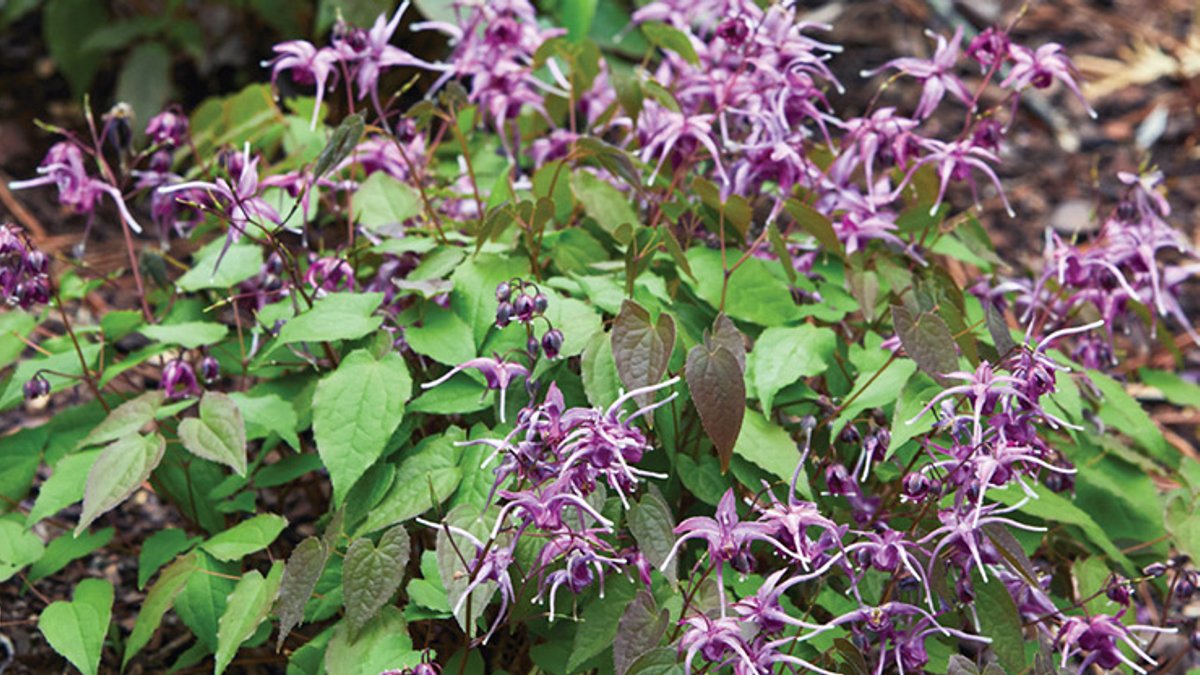
When other perennials haven’t shown the slightest intention of emerging or are just peeking through the soil in spring, epimedium is already active. Its dainty starburst blooms create a cloud of color that draws you out to the garden even on chilly days. This shade perennial, also called barrenwort, is often overlooked despite its resilience.
The plant typically reaches heights of 6 to 24 inches and spreads about 6 to 36 inches wide. It is cold hardy in USDA zones 4 to 9. The plant faces no serious pest threats and is notably deer-resistant. Once established in a shady spot, it tolerates drought well.
The foliage offers interest across multiple seasons. In spring, small leaflets accompany the flowers while larger leaves begin to fill in from the crown. By summer, the plants form a neat mound of pest- and disease-resistant foliage that requires little maintenance. Deciduous types lose leaves after frost, but evergreen varieties persist through mild winters.
Related: Dark blooms transform eerie garden spaces
Distinctive Flowers and Colors
The blooms are the main attraction, featuring long nectar-filled spurs that give them a spidery look. Pierre’s Purple is a standard example of this form, though some varieties like Sulphureum have short spurs and large sepals. Others, such as Lemon Zest, are bell-shaped with almost no spurs.
Color options range widely. Flame Thrower mixes raspberry pink and pale yellow, while Purple Prince is deep purple with white spur tips. Arctic Wings provides a solid white option for contrast.
Expert Advice on Growing
More than 50 species originate from woodlands in Asia, Europe, and North Africa. Karen Perkins, retired owner of Garden Vision Epimediums, has cultivated this shade-loving perennial for decades. She maintains a website to share information on different varieties. “I love epimediums for their unique and delicate beauty, toughness and versatility,” Perkins says. “They’re easy to grow, so they work not only for beginning gardeners but also for collectors of the weird and wonderful.”
Related: Zinnias get a vibrant new look
While older varieties often had small blooms hidden below the leaves, modern breeding focuses on visibility. New cultivars feature eye-catching colors and larger, longer-lasting blooms.
Several noteworthy options exist for specific garden needs. Pink Champagne produces soft pink-spurred flowers with a raspberry center and elongated evergreen leaves speckled with purple. It grows 18 to 24 inches tall and is hardy in zones 5 to 8.


