
Richard and Liz Templer, a retired couple, have transformed their Victorian home in southwest London into a low-carbon haven for their retirement. With sustainability in mind, they chose to retrofit and extend their period home instead of moving to a new location.
The couple had bought their three-bedroom home many years ago and had made improvements over the years, including a conventional extension at the rear. However, the experience of living in the house was “all disconnected,” according to Richard, with separate compartments and limited visibility of the garden.
Transforming the Home
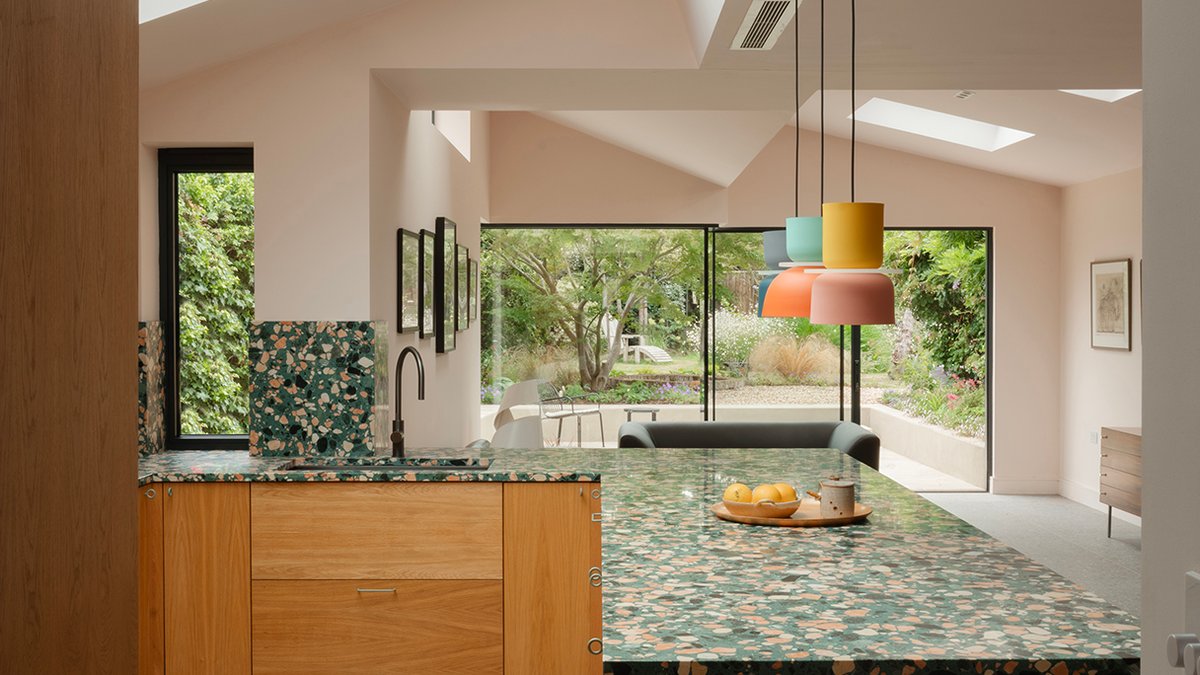
Richard and Liz turned to Francesco Pierazzi Architects to retrofit the original home and replace the existing extension with a more contemporary, sustainable design. The result is a generous open-plan space, cleverly zoned into a kitchen, dining area, and garden room, with a striking ‘sawtooth’ roofline inspired by the area’s industrial past.
The new layout also anticipates the couple’s future needs, with most living spaces now in the new extension and the older ground-floor rooms converted into a study with potential for an accessible downstairs bedroom. The brief included environmental sustainability, adapting the house for a changing climate, and reducing energy use through improved insulation.
Despite initial planning rejection due to the use of timber, the couple and their architect reapplied for an extension constructed using breeze-block clad in ‘weathered yellow stock’ brick. With permission granted, Richard and Liz stayed in the house during the retrofit, which mainly focused on insulating the walls, using Kingspan insulation and ultra-thin Aerogel in areas with limited space.
The retrofit also included significant upgrades to the home’s heating, hot water, and ventilation systems, with an air-source heat pump supplying both heating and hot water. A mechanical ventilation system with heat recovery maintains fresh air circulation while capturing and reusing heat from expelled stale air.
Richard specified the system, which he says “doesn’t differ from most everyday systems people will buy.” He is monitoring the house and reports that it is using less than 25% of the energy it previously needed to both heat and cool, with the air source heat pump working at 400% efficiency.
In practice, this means that the couple can enjoy their retirement in a comfortable and sustainable home, with reduced energy bills and a lower carbon footprint. The transformation of their home has not only improved their living space but also contributed to a more environmentally friendly lifestyle.
Richard has also installed a 7,500-litre underground water tank to collect rainwater for their large garden, which he believes is vital in coping with hotter summers due to climate change.
With the final part of their brief, “to have fun,” Richard and Liz have certainly achieved that, with pale pink walls and a playful terrazzo worktop in their new extension. The skylights, angled ceilings, and pastel hues differentiate spaces, creating subtle zones within the open-plan layout.
At the heart of their new extension is a modern oak kitchen with an eye-catching terrazzo worktop, which Richard says “has style and pizazz.” The couple is delighted with their new home, which is “a happy place, full of joy.”
The couple’s choice of materials and design has resulted in a unique and functional space, with the ‘sawtooth’ roofline and skylights flooding the space with natural light. The use of Aerogel insulation in areas with limited space has improved thermal performance, adding just 13mm to the wall depth.
Energy Efficiency and Sustainability
The air-source heat pump, which supplies both heating and hot water, is working at 400% efficiency, delivering 4kWh of heat into the system for every 1kWh of electricity consumed. This, combined with the improved insulation and mechanical ventilation system, has resulted in a significant reduction in energy use.


