
Designing With Late-Season Salvias in the Garden
Building Structure With Tall Varieties
Salvias are among the toughest plants available for gardeners. They endure clay soil, drought, high heat, and humidity without complaint. Deer rarely bother them. This resilience makes them a solid choice for low-maintenance beds, borders, and containers where you want color that lasts. The plant’s appearance varies. Some varieties send up flower spikes above neat mounds of foliage, while others have a looser, billowy growth habit. Understanding these differences helps determine where they fit best in your layout.
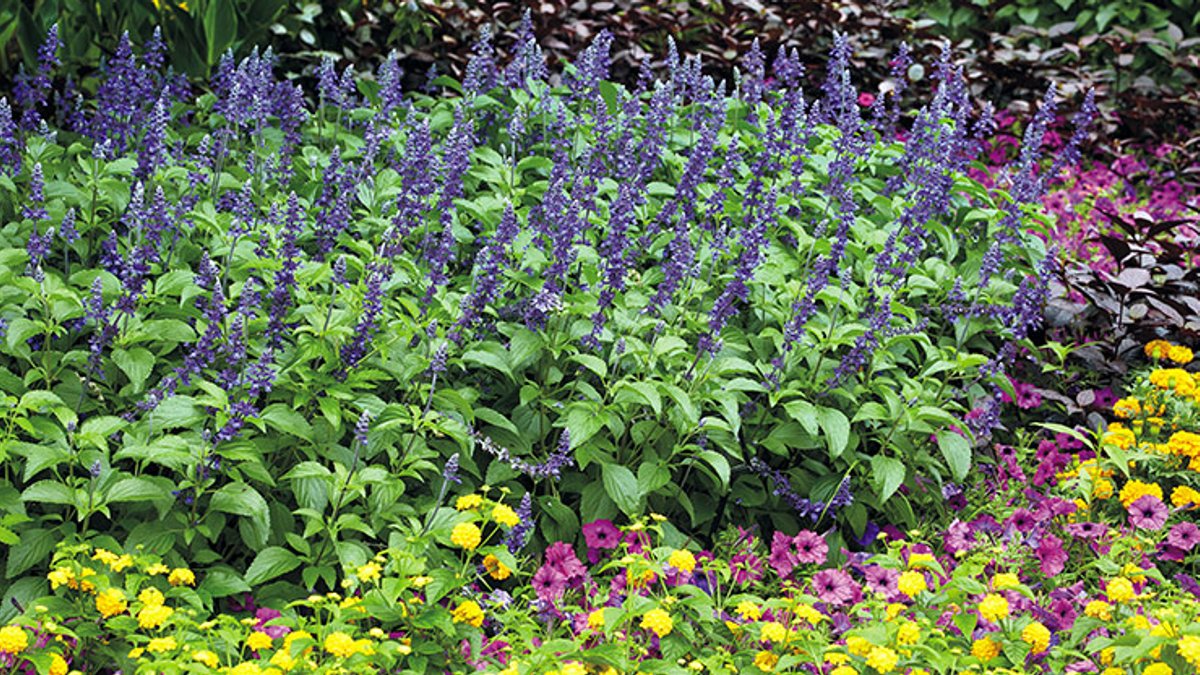
Mealycup sage (Salvia farinacea) and anise-scented sage (Salvia guaranitica) grow larger than many bedding plants, typically reaching one to three feet tall and wide. These species are excellent for creating a mass of color. Planting four or five of them together creates an attractive, well-behaved block of flowers that rise uniformly above the leaves. Because they grow relatively large, they work well in the middle or back of a border. They provide a backdrop for low-growing annuals and draw the eye upward. Plant them with enough space in the spring so they do not become cramped as they mature.
Related: Garden Design Tips for Homeowners
Filling Containers and Making Seasonal Statements
Salvias also function effectively in containers. One or two plants can make a strong impact. In small pots, the bright spikes of a larger variety can serve as a focal point, or thriller. In larger containers, their upright blooms act as filler. Angling the plants slightly outward during planting prevents the flower spikes from tangling with other elements. Scarlet sage (Salvia splendens) and Skyscraper salvia are particularly good choices for this role.
Some salvias, like Mexican bush sage (Salvia leucantha) and pineapple sage (Salvia elegans), bloom specifically in the fall. The shorter days trigger their flower production. These plants can grow up to four feet tall and three feet wide with loose habits and long, curving spikes. Because they offer a single, dramatic season rather than consistent bloom throughout the year, they are best used as statements. Using only one to three plants allows their size to stand out against the rest of the setting.
Pairing Plants for Visual Interest
These late-blooming salvias complement classic fall perennials. A collection of compact garden mums (Chrysanthemum hybrids) planted around the base of Mexican bush sage or pineapple sage adds form and contrast. The mums provide structure, while the salvias offer loose, drooping spikes. Combining sages with grasses creates another interesting dynamic. Maiden grasses (Miscanthus sinensis) or feather reed grass (Calamagrostis x acutiflora) allow the flowers and seedheads to mix and mingle. The dense foliage of the reed grasses can also serve as a backdrop for the sage blooms.


